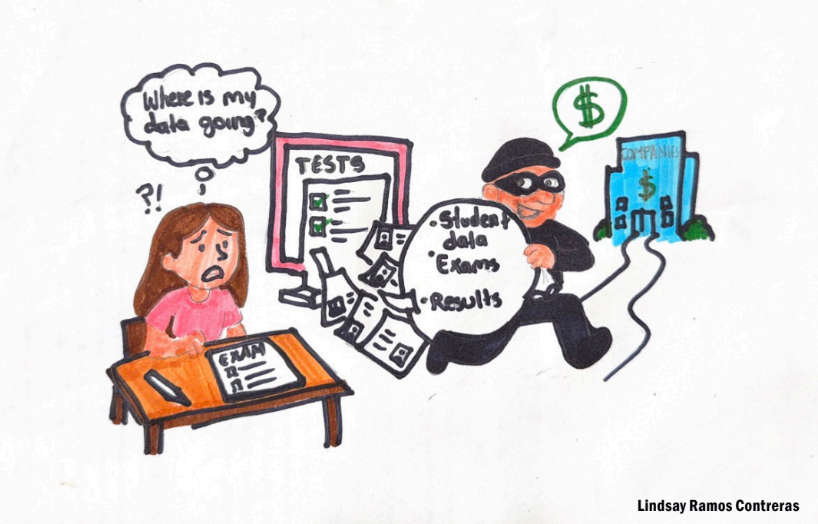
As artificial intelligence becomes more common in classrooms, students and teachers are divided over how — and whether — it should be used for schoolwork.
Students’ opinions ranged from calling AI a “cheat code” to worrying about its environmental impact, according to surveys conducted by The Oracle. A student survey received 339 responses, while the teacher survey received 20 replies. To encourage honest answers, respondents were not required to provide their names.
A quarter of teachers said they believe only 20 to 30 percent of students use AI, but 57 percent of students reported using it sometimes or always, and 27 percent acknowledged they use it for homework.
Meanwhile, 30 percent of teachers said they use AI themselves for grading or lesson planning. Others said they use it in their personal life
for things such as generating pet activities. Students show a wide spectrum of opinions on how AI is shaping the world. “Even though I use it, I’m trying to stop because it’s damaging the environment,” one student wrote.
57% of students say they use AI at least sometimes.
Another said, “Lately, whenever I see AI being used or an AI video on TikTok, it irks me. … I HATE AI.” Others were even more conflicted.
“AI is good but it should be limited for students. This cycle of using AI will cause the fall of critical thinking in the future generation. However, AI can be beneficial if used correctly for studying, not instantaneous answers.”
30% of teachers say they use AI for grading or lesson planning
One student wrote that they use AI only for ideas but not to write a whole essay. Another admitted AI made assignments easier — sometimes
too easy. “For my Spanish work, I like to use Gemini and also ChatGPT Pro. If I know I can’t get things done, I can just AI it,” they said, adding it makes them procrastinate more.
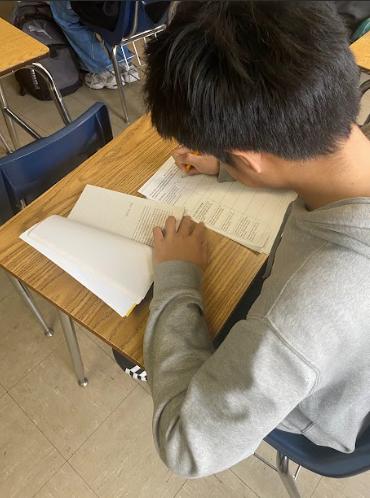
Teachers are also divided. Laurel Sinclair prohibits her English students from using AI, requiring essays and other assignments to be written by hand. “If I see AI being used by students in their work, I’ll talk to the students face-to-face and I (will) send a message home to their parents,” she said.
However, Ms. Sinclair sees banning AI as an uphill battle. “Because of the advancements in AI, there is no real escape from it,” she said, add-
ing that she thinks teachers will be replaced by AI someday.
In an interview, freshman Cesar Krishna Ortiz said he understands that the reliance on AI can prevent a student from understanding new material. In an interview, freshman Cesar Krishna Ortiz said he understands that the reliance on AI can prevent a student from understanding new material.
“There are some students out there that don’t know how to use AI the right way and not just plagiarize,” he said, explaining why he would like teachers to show students how to use the powerful technology instead of simply banning or ignoring it. That’s what Wilmot Yeh wants.
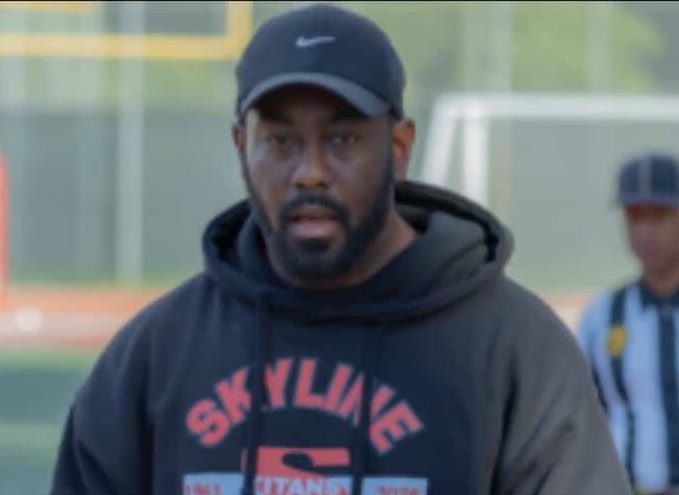
He is a physics teacher and one of Skyline’s digital leaders. “When students use AI, most of them don’t use it to its full potential,” he said. “It can be a tool for people to use as a responsible source of information or help.” He explained that AI shouldn’t replace real research, but instead support it. For example, students working on their capstones might use AI to brainstorm topics or identify sources, but still need to read articles, verify facts, and build their own arguments.
As he put it, “If you use AI to do the hard stuff so you can do the easy stuff, you’ll have no value. If you use AI to do the easy stuff so you can do even harder stuff, you’ll have more value.”